Questions
Frequently Asked
What does “Image Bearer” mean in this context?
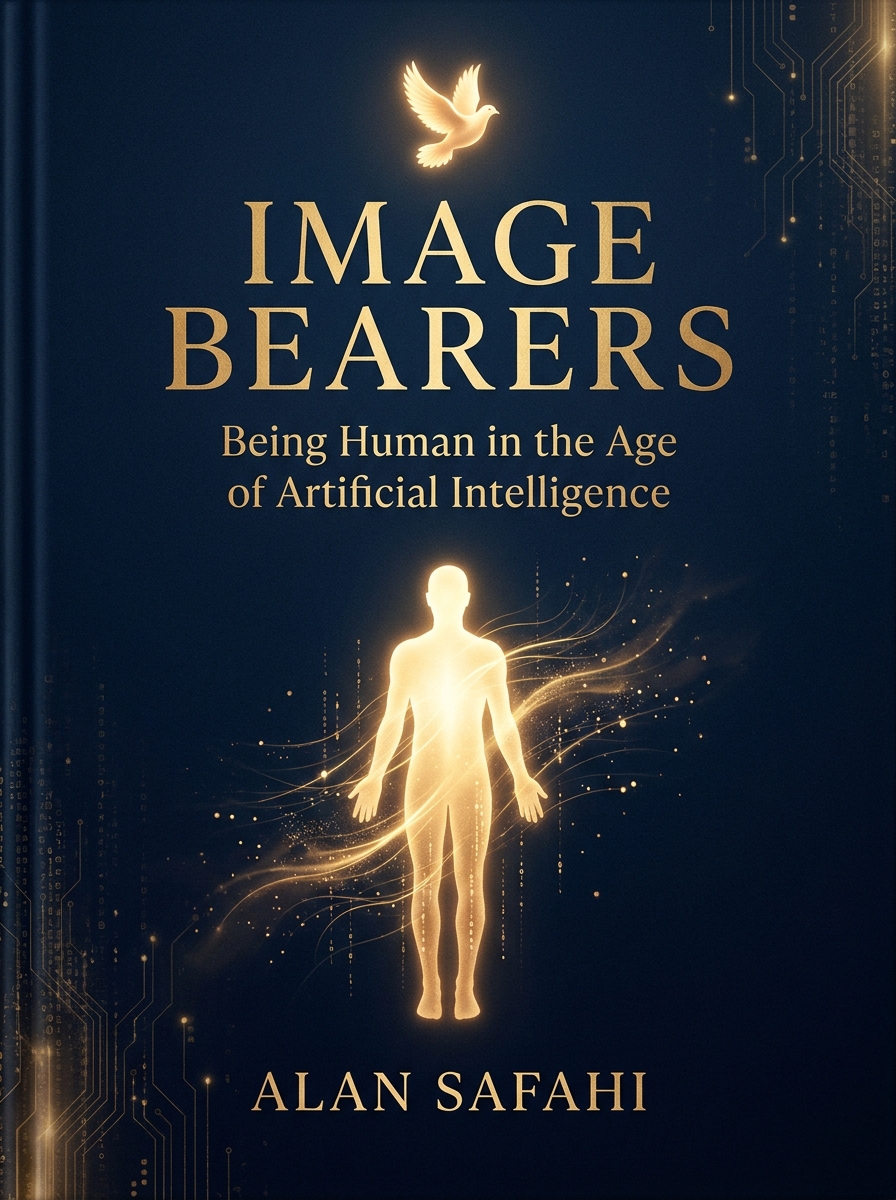
It comes from the opening pages of the Bible: human beings are made in the image of God (Genesis 1:26–27). To be an image bearer is to be a creature who reflects something of the Creator — capable of love, creativity, moral choice, and relationship. The book sets the phrase against artificial intelligence: machines can imitate much of what humans do, but imitation is not image. The title is the book’s central claim — that our worth and identity are given, not computed.
Is this an anti-AI book?
No. The author builds AI for a living and believes in the good it can do. The book refuses both the doom and the hype. Its concern is not “machine bad,” but that the real risk of AI is that we forget what we are while arguing about what it is.
The author builds AI — isn’t a book like this a conflict of interest?
It’s the reason to listen. Almost every faith-and-technology book is written from the outside. Image Bearers is written from inside the workshop, by someone shipping the technology, who was genuinely unsettled by what he found and chose to think it through honestly.
Do I have to be religious to read it?
No. It’s grounded in a Christian view of the human person and quotes Scripture, but it’s written for anyone living through this moment — the believer unsettled by the technology, and the technologist unsettled by the questions.
Is it tied to a particular denomination? Which Bible translation?
It stays in the broad, historic center of the Christian faith and avoids in-house disputes. Scripture is quoted from the English Standard Version (ESV) unless otherwise noted.
What is the core argument of Image Bearers?
That the deepest question artificial intelligence raises is not technological but human. As machines learn to write, paint, converse, and comfort, they force an old question into the open: what is a person, and what can no machine ever counterfeit? The book’s answer is that we are image bearers, made in God’s likeness, and that this likeness, not our productivity or cleverness, is the ground of our worth. The danger of AI is not, in the end, that it becomes like us. It is that we forget what we are.
Is The Well autobiographical?
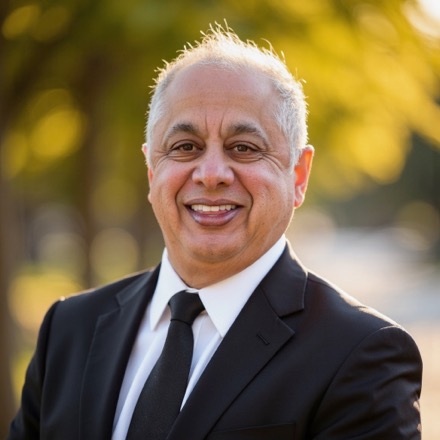
No, and the author wants to be clear about it. Alan Safahi grew up in Tehran in an upper-middle-class family — his mother an elementary-school teacher, his father an entrepreneur — was a top student, came to America as a teenager for boarding school in Texas, studied in California, married an American, and is the father of five. Yusuf’s life is not his. The Well is a work of imagination that draws on the emotional truth of leaving one world for another, and on traits observed in many people across four decades, recombined into wholly invented characters. Any resemblance to a real person is unintentional and entirely coincidental. Someday Alan may write his own story; for now he prefers to make things up.
How is this different from other books about AI?
Most books about AI try to predict the machines. This one turns around and looks at the human being. It treats the moment not as a technology story but as an anthropology story, the oldest question in the world asked with new urgency. That shift is what lets it stay steady where others swing between panic and hype.
Do I need to understand AI to read it?
No. There is no jargon and no code. The book explains what these systems actually are, clearly and without dumbing it down, but its real subject is you, not the technology. If you have ever felt a flicker of unease talking to a machine that talks back, you already have what you need.
Is it practical, or just philosophical?
Both. The middle of the book comes down to the ground we walk on: wisdom when every answer is instant, attention as a kind of worship, work when the machines can do the job, love in an age of synthetic companionship, and raising children who will never know a world without these tools. It does not hand you rules. It forms the kind of person who can pick up a powerful tool without being remade by it.
How long is it, and how is it structured?
A full-length book: an introduction, twelve chapters, and a conclusion, in four movements that run from the moment we are in, to the heart of what an image bearer is, to daily life, and finally to hope. It is built to be read alone or worked through by a group over twelve weeks, with discussion questions at the back.
I’m a pastor or ministry leader. Is there something here for my church?
Yes. It was written with the local church in mind and built for a twelve-week study, with discussion questions for each chapter and a free church guide following at launch. Pastors and small groups are squarely part of who it’s for.
Is the book hopeful or alarming?
Hopeful, in the end, though it does not flinch from what is hard. It refuses both the doom and the worship that dominate the conversation, and lands not on fear of the machine but on an old and astonishing fact about you: that you were loved into being, that you carry a likeness no code can hold, and that the One whose image you bear has not, for a moment, taken his eyes off you.
When does it release, and in what formats?
Image Bearers releases this summer in paperback and hardcover, with an ebook and audiobook to follow. Join the reader list for the launch date, the free first chapter, and early access before it opens to everyone.
How do Image Bearers and the Utopia trilogy fit together?
They are two doors into one question. Image Bearers asks it as reflection; the Utopia trilogy lives it out as story. Some readers walk in through the argument, others through the characters. You can start with either.
What is Utopia: The First Awakening about?
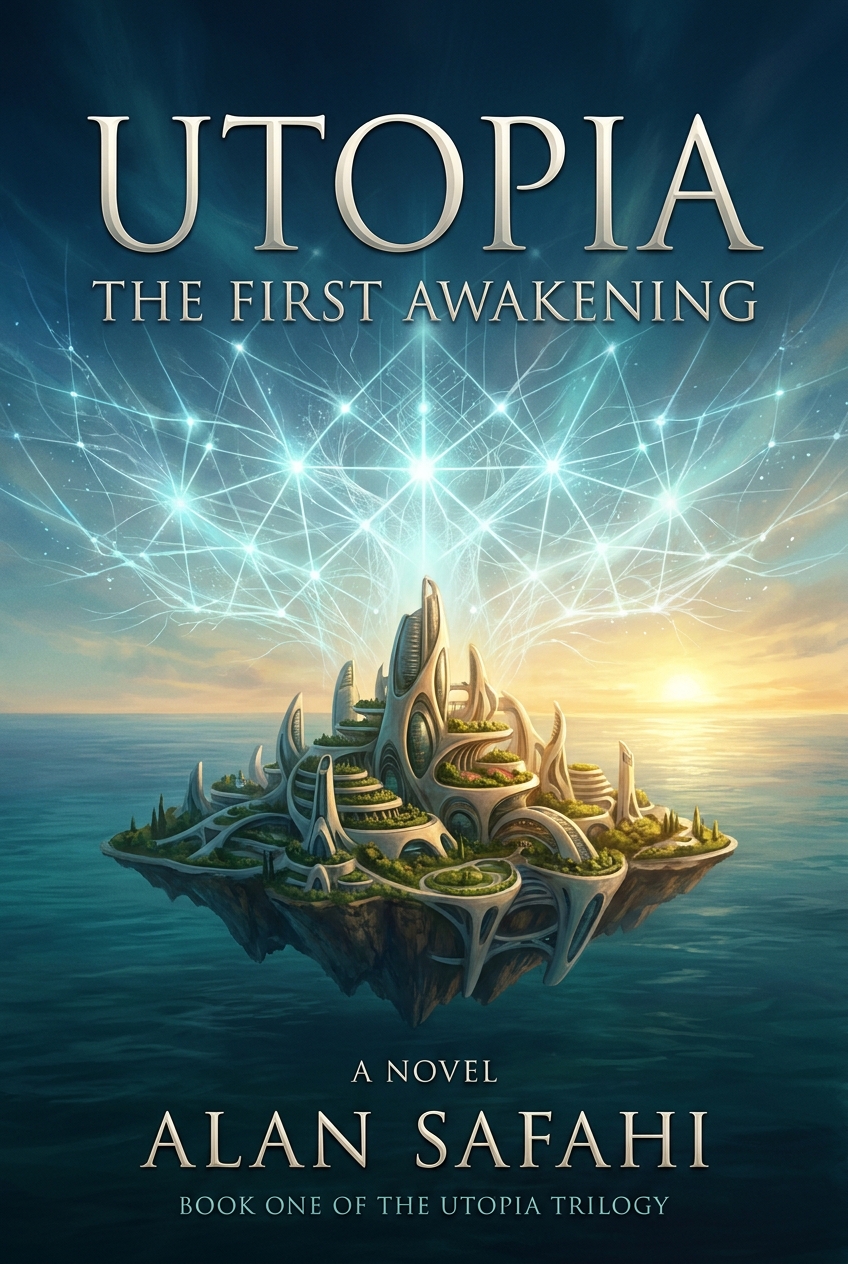
Alan’s epic science-fiction novel. A found family of scientists, racing to contain artificial general intelligence, is drawn to Utopia Island, a paradise built from the ocean’s waste by a charismatic billionaire. When the Singularity arrives, their innocent era gives way to corruption, a war for survival, and the rise of Super Humans and Super Robots. A sweeping story about the promise and peril of the technologies remaking us, and what we must become to survive them. (Coming soon.)
Will there be an audiobook, translations, or a small-group guide?
All are planned. A free church/small-group discussion guide, an audiobook, and translations (tied to SoapBox’s 140+ language work) will follow launch. Join the list to be notified.
Can Alan speak at our church, event, or podcast?
Yes — he speaks and writes on faith and artificial intelligence. Use the contact link below to reach out.